Simple Stress Watch

A free, minimal HRV recovery meter for Apple Watch. One number, one color, one glance. It shows your heart rate variability compared to your own baseline, then gets out of your way.

Download Simple Stress Watch on the App Store

Completely free: no subscription, no account, no in-app purchases. Requires Apple Watch with watchOS 26.
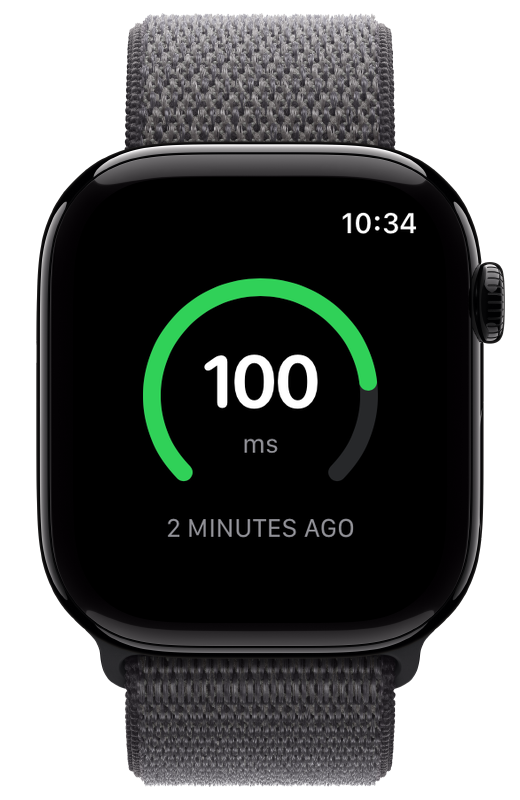
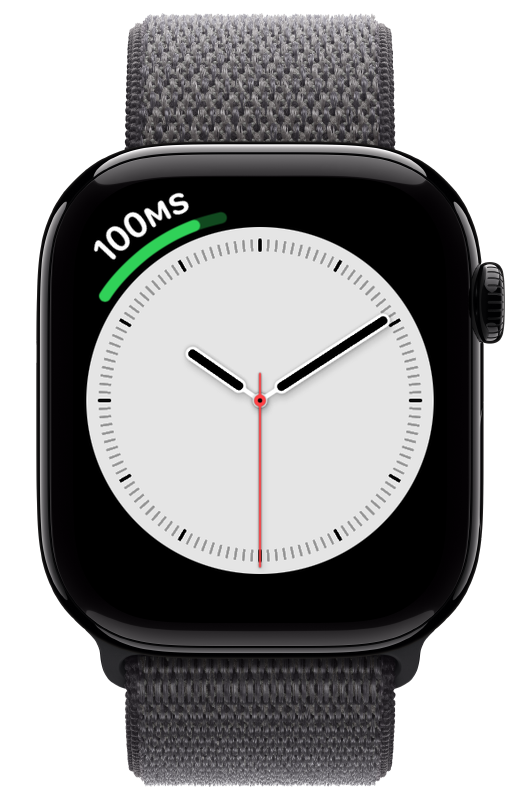
Simple Stress Watch showing an HRV reading of 100 ms in a green recovery zone on Apple Watch

One number, not a verdict

Most stress apps try to interpret your body for you. They take your heart rate variability, run it through a model, and tell you a story: you are stressed, you are recovered, your score is 64. Simple Stress Watch takes the opposite approach. It shows you the number and trusts you to know your own life.

The watch face shows your current HRV in milliseconds, inside a gauge colored relative to your personal baseline: green when you are above it, white when you are around it, yellow when you are below it, and red when you are well below it. That is the whole product. No notifications nagging you, no daily report to read, no streak to maintain.

What HRV can tell you

Heart rate variability is the small variation in time between your heartbeats. It reflects the balance of your autonomic nervous system, the part of you that handles rest and recovery on one side and alertness and effort on the other. Research has consistently associated lower HRV with stress and higher sympathetic activity, and higher HRV with rest and recovery.[1]

The catch is that HRV varies enormously between people. Age, fitness, genetics, and measurement timing all move the number, so a value that is high for one person can be low for another.[2] That is exactly why Simple Stress Watch compares each reading to your own rolling baseline instead of to a population average. The trend against your normal is the signal worth glancing at.

Simple Stress Watch is a general wellness app. It does not diagnose, treat, cure, or prevent any condition, and a single HRV reading is not a medical assessment. The colored zones describe where a reading sits relative to your own baseline, not a clinical judgment.

How it works

Reads HRV from Apple Health

It uses the HRV (SDNN) samples your Apple Watch already records and stores in Apple Health. Nothing new to wear, nothing to set up beyond granting Health access.

Builds your baseline

A rolling baseline from your recent readings sets the center of the gauge, so the colors mean something for you specifically rather than for an average stranger.

Lives on your watch face

Complications for every accessory family (corner, circular, rectangular, inline) let you put the meter on almost any face. Glance, and you have it.

Today’s HRV on iPhone

A small iPhone widget shows today’s HRV so you can keep the number close without lifting your wrist.

Private by design

Simple Stress Watch has no accounts, no uploads, and no analytics. Your HRV is read locally from Apple Health and stays on your device. There is no server to trust, because there is no server. That is also why it can stay free: there is nothing to monetize on the back end.

Put your HRV on your watch face

Free, no subscription. Requires Apple Watch with watchOS 26.

Download Simple Stress Watch on the App Store
Simple Stress Watch HRV complication on an Apple Watch face

Frequently Asked Questions

What does Simple Stress Watch do?

It reads your heart rate variability (HRV) from Apple Health, compares it to your personal rolling baseline, and shows it as a single number with a colored recovery zone on your Apple Watch face. It does not interpret your stress for you or send reminders. It shows you the number and lets you draw your own conclusions.

Is Simple Stress Watch free?

Yes. It is free to download with no subscription and no Pro tier. There is no account to create and no upsell.

Does my data stay private?

Your data stays on your device. There are no accounts, no uploads, and no analytics. It reads HRV locally from Apple Health and never sends it anywhere.

What is a good HRV number?

There is no universal good HRV number. HRV varies widely between people based on age, fitness, and genetics, so your own baseline is far more meaningful than any absolute value. Simple Stress Watch compares each reading to your personal rolling baseline rather than to a population average.

Which Apple Watch faces does it support?

It supports every complication family (corner, circular, rectangular, and inline), so you can place the meter on almost any watch face. An iPhone Today’s HRV widget is also included.

Related: A simpler StressWatch alternative · Simple stress & HRV apps for Apple Watch · Stress heart rate monitor (Beat Watcher)

References

  1. Kim HG, Cheon EJ, Bai DS, Lee YH, Koo BH. “Stress and Heart Rate Variability: A Meta-Analysis and Review of the Literature.” Psychiatry Investigation, 2018. PMC 5900369
  2. Shaffer F, Ginsberg JP. “An Overview of Heart Rate Variability Metrics and Norms.” Frontiers in Public Health, 2017. PMC 5624990